

Should you buy your student a house instead of paying rent?
In a university town, the math quietly shifts every September: four years of a student's rent starts to look a lot like someone else's mortgage payment.
The appeal is straightforward — but turning it into a sound purchase depends far more on how the financing is structured than on the property itself.
For investors, meanwhile, the math on buy-and-hold rentals is edging back toward the point where the numbers simply work.
Why are parents of students suddenly in the market?
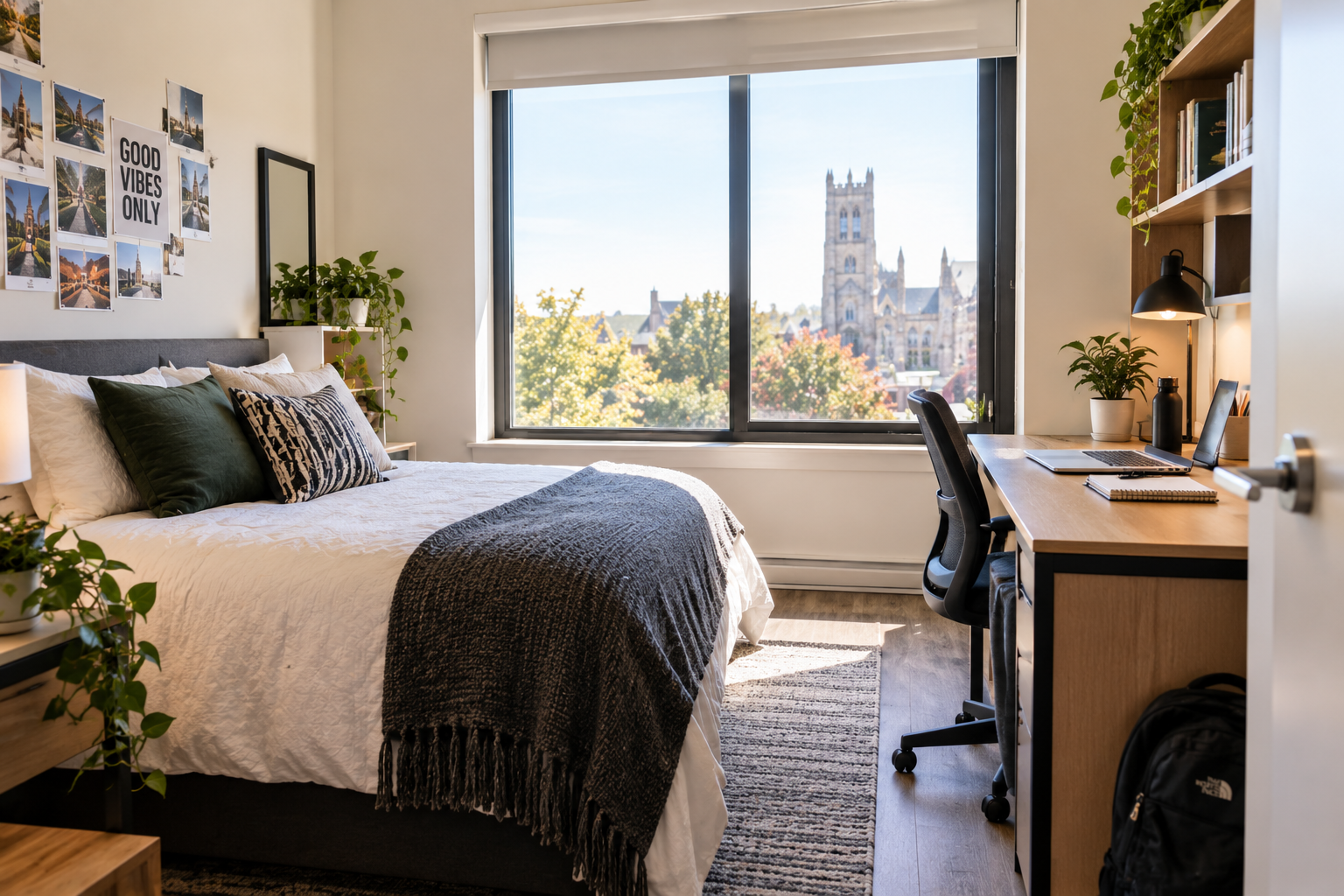
The timing is seasonal and predictable. As the school year settles in, families begin weighing whether four years of rent cheques might be better spent building equity in a property their child can live in — ideally alongside a few paying roommates. The LIVEHERE team has recently had success taking parents out to view student rentals so they can get a genuine feel for the market: what these properties rent for, how they are managed, and what ownership actually involves.
That interest is beginning to translate into action. In just the past couple of weeks, the first of these parent-investors have closed on their purchases — securing their children's housing and, rather than handing a landlord roughly a thousand dollars a month, setting the property up to generate a little income of its own. It is a tidy illustration of the whole appeal: a place for the student to live that also works as an asset.
The idea is compelling, but it is not a decision to make on instinct. The gap between a student rental that pays for itself and one that becomes a headache usually comes down to the purchase price, the financing, and a realistic read of ongoing management — which is where a closer look at the numbers earns its keep.
How does financing a student rental actually work?
This is where the conversation tends to get interesting. In the right circumstances, it is possible to finance a student-rental purchase at up to 100 percent — provided there is another asset that can be leveraged as part of the structure. That is precisely what LIVEHERE's financing program is built to do: rather than looking at a single property in isolation, it takes the whole financial picture into account and works out how the existing pieces can support the new one.
That whole-picture approach also means scrutiny pays off. In one recent case, while reviewing a client's financing application, the team combed through the supporting documents — they ask for a great deal of information, and for good reason — and noticed that the client had likely missed a few deductions on an existing investment property. Flagging it saved the client several thousand dollars in taxes.
As always, the usual caveat applies: financing structures and tax outcomes depend entirely on individual circumstances, and none of this is a substitute for personalized financial or tax advice. The broader point is that the details are where the value hides.
What is happening on the development side near campus?
Demand for student housing is also playing out at a larger scale. LIVEHERE recently secured an off-market parcel of land, brought forward by a local agent, sitting directly across from the university campus and well suited to development — and is now assessing exactly what can be built there. The team is separately working on a collaboration aimed at higher-density student housing near campus.
For most buyers this is simply context, but it is useful context: sustained demand for well-located student accommodation is what underpins the rental case in the first place, and it is not going away.
Does the math work for investors right now?
Beyond the student-housing niche, the general investment picture is improving. The market appears to be reaching a point where it once again makes sense to buy a property, rent it out, and live on the resulting cash flow — the kind of straightforward buy-and-hold logic that has been harder to justify in recent years. Opportunities are still surfacing for those who are paying attention. At the same time, the property-management side is getting busier heading into the colder months, a reminder that owning a rental is an ongoing commitment as much as a purchase.
What comes next?
The thread running through the fall is that university-town real estate — whether a single student rental, a first investment property, or a larger development play — rewards owners who treat financing as the starting point rather than an afterthought. The parents and investors who move thoughtfully now, with a clear view of how the whole picture fits together, are the ones best positioned as the market heads into a busier stretch."
For anyone weighing a purchase near campus, or simply wondering whether the numbers could work, it is a sensible time to start the conversation.